
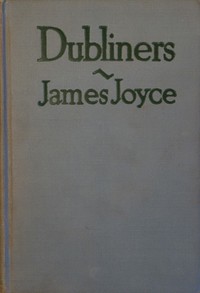
James Joyce spent ten years trying to get Dubliners published. Publishers rejected it for obscenity, for libel, for its naming of actual Dublin establishments. One publisher agreed, printed 1,000 copies, then destroyed them. The collection finally appeared in 1914, by which point Joyce had already written most of A Portrait of the Artist as a Young Man.
He was twenty-five when he began writing these stories. They are the work of an extraordinary intelligence fully formed.
What Dubliners Is About
Fifteen stories. Dublin in the early 1900s. Arranged, Joyce said, in a series of chapters of the moral history of his country — childhood, adolescence, mature life, public life. The paralysis of Irish life, as he saw it, enacted in fifteen different registers.
Araby — a boy is in love with his friend's sister. He promises to bring her something from the bazaar. He arrives late; the bazaar is closing. The final revelation in the dark hall is one of the most economical moments of humiliation in literature.
Eveline — a young woman plans to emigrate with her lover. She stands on the quay. She cannot move. She watches him go.
The Boarding House — a landlady engineers a marriage between her daughter and a lodger. The story is told from three perspectives.
A Painful Case — Mr Duffy refuses connection. Years later he reads a newspaper account of the woman he refused. He walks in the dark.
The Dead — Gabriel Conroy attends a Christmas dinner at his aunts' house. He gives a speech. He dances with a woman he nearly insulted. He desires his wife. In their hotel room, she weeps for a young man who died for love of her twenty years ago. Snow falls over Ireland. Gabriel dissolves into the living and the dead.
How Long Is Dubliners?
| Reading speed | Time to finish |
|---|---|
| 200 WPM | ~5.7 hours |
| 250 WPM (average) | ~4.5 hours |
| 350 WPM (practised) | ~3.2 hours |
| 500 WPM (RSVP) | ~2.3 hours |
Reading Strategy
Read "The Dead" last. The collection is ordered deliberately; "The Dead" is the culmination. It contains all fifteen stories' themes simultaneously.
warpread's RSVP mode by story:
- Most stories: 350–400 WPM. Joyce's early prose moves cleanly.
- "Araby," "Eveline," "A Painful Case": 300 WPM. The emotional weight requires attention.
- "The Dead": 300 WPM for the dinner scenes; 250 WPM from the hotel room onwards. The final page: your slowest possible pace.
The epiphanies. Each story ends with a moment that requires a pause — not a twist, but a revelation. After each story, stop for ten seconds before starting the next. The stories echo each other.
For the full speed reading technique, see how to read faster.
Where to Read Dubliners Free
- warpread library — instant reading, RSVP mode, no account needed
- Project Gutenberg — complete text, EPUB and download
- Standard Ebooks — best-formatted free EPUB
Related Reading
- The Turn of the Screw — Henry James's concentrated, formally controlled prose in a shorter form
- Mrs Dalloway — Woolf's stream-of-consciousness; the modernist parallel to Joyce
- The Yellow Wallpaper — single story; same era; similar technique of revelation through understatement
For the full list of free classics, see the 50 best free classic novels to read online.
Topics
Frequently asked questions
Is Dubliners free to read online?
Yes. Dubliners was published in 1914 and is in the public domain. You can read it free at warpread.app's library (Project Gutenberg ID 2814), Standard Ebooks, and many other sites — no account, no download, no payment.
How long does it take to read Dubliners?
Dubliners is approximately 68,000 words across fifteen stories. At 250 WPM it takes about 4.5 hours. At 350 WPM around 3.2 hours. At 500 WPM with RSVP reading, about 2.3 hours. One story per session is a natural RSVP approach — most stories are 3,000–6,000 words and complete in 10–20 minutes.
What is Dubliners about?
Dubliners is a collection of fifteen short stories set in Dublin in the early 1900s. They are arranged by age of protagonist: childhood stories first, then adolescence, then adult life, then public life. Each story enacts what Joyce called 'an epiphany' — a moment of revelation, usually quiet, usually about the paralysis he saw in Irish life. The collection ends with 'The Dead', widely considered the greatest short story in the English language.
What is the best story in Dubliners?
'The Dead' is universally considered the masterwork — a long story (almost a novella) ending with Gabriel Conroy's vision of Ireland under snow. Joyce himself considered it the best thing he had written. Other essential stories: 'Araby' (childhood longing and humiliation), 'Eveline' (the paralysed emigrant), 'A Painful Case' (solitude and its consequences), 'Ivy Day in the Committee Room' (political decay). Every story is worth reading, but these five are the core.
What is an 'epiphany' in Joyce's sense?
Joyce borrowed the word from religion and gave it a secular meaning: a moment of sudden revelation, usually triggered by something trivial — a phrase overheard, an object seen, a gesture noticed. The epiphany doesn't explain itself; it simply presents. In 'Araby', it is the moment the boy sees the bazaar is just commerce. In 'The Dead', it is the moment Gabriel understands his marriage and himself. Joyce's epiphanies are almost always deflating — they reveal what has been missed or lost or never possessed.
Is Dubliners appropriate for RSVP reading?
Dubliners is ideal for RSVP reading. Joyce's early prose is precise, controlled, and understated — very different from Ulysses. At 350–400 WPM in warpread's RSVP mode, the emotional architecture of each story builds effectively. 'The Dead' should be read more slowly: 300 WPM for the party scenes, 250 WPM for the final three pages. The ending of 'The Dead' is one of the most carefully cadenced passages in English prose — let each sentence arrive.
Ready to apply these techniques?
Take the free reading speed test to benchmark your WPM and get personalised technique suggestions.