
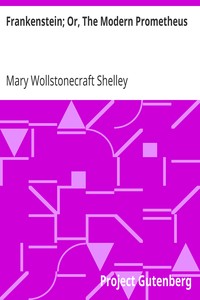
Mary Shelley wrote Frankenstein in 1816 during the 'Year Without a Summer' — a Swiss summer so cold and rainy that she and her companions, including Percy Shelley and Lord Byron, challenged each other to write ghost stories. She was eighteen years old. The novel she produced is widely credited with inventing science fiction, and it has been in continuous print ever since.
It is also in the public domain, entirely free to read, and at 75,000 words, shorter than most thrillers.
Open Frankenstein in warpread →
What Frankenstein Is Actually About
The film versions have created a specific and largely misleading image of Frankenstein: a monster with neck bolts, a mad scientist, a dark castle, lightning.
The novel is stranger and more morally serious than this.
Victor Frankenstein is not mad — he is ambitious and incurious about the consequences of his ambitions. He creates the creature not in a castle but in a student apartment in Ingolstadt, and he recoils not because he fears the creature's danger but because it is ugly. He abandons it immediately, hoping it will simply go away.
It doesn't.
The creature's narrative — embedded at the centre of the novel, told in the creature's own voice to Victor — is one of literature's great reversals. The 'monster' is articulate, philosophical, and wracked by a desire for connection that Victor repeatedly refuses. The creature has read Plutarch, Milton, and Goethe. He asks for a companion; Victor begins to build one, then destroys her in front of the creature. The violence that follows is not madness but cause and effect.
The novel is structured as a frame narrative: an explorer named Walton is writing letters to his sister from an Arctic expedition; he rescues an exhausted Victor; Victor tells his story; Victor transcribes the creature's story. This nested structure means the events are always filtered and unreliable, which is part of Shelley's point.
How Long Is Frankenstein?
| Reading speed | Time to finish |
|---|---|
| 200 WPM (slow) | ~6.3 hours |
| 250 WPM (average) | ~5 hours |
| 350 WPM (practised) | ~3.6 hours |
| 500 WPM (RSVP) | ~2.5 hours |
At a moderate reading speed, Frankenstein is an afternoon. At a practised speed reading pace, it is a morning.
How to Read Frankenstein Faster
Early 19th-century prose tends to use longer sentences than modern readers are accustomed to. This is Frankenstein's main challenge for speed reading: the syntactic structures require a little more processing than a contemporary thriller.
Tips:
-
Use RSVP at 280–320 WPM to start — adjust upward as you get into the rhythm. warpread's adjustable WPM makes this easy. Once Shelley's sentence patterns become familiar (and they do quickly), you can push to 400+ WPM.
-
Don't skim the creature's narrative (Chapters 11–16) — this is the thematic heart of the novel and the section that inverts all expectations. Read it at full attention.
-
The Arctic frame moves quickly — Walton's letters are short and readable. The pace increases in the outer frame.
-
Notice the parallel structure — Victor and the creature are mirrors of each other in interesting ways. Tracking the parallels makes the middle section feel like a richer reading experience rather than a long digression.
The guide to reading faster covers the full RSVP technique if this is your first time with speed reading.
Why Read Frankenstein Now
Frankenstein's specific concerns — what happens when a creator abandons their creation, what obligations science has to the beings it produces, whether intelligence and feeling constitute personhood — have not aged. If anything, they have sharpened.
Every serious conversation about artificial intelligence eventually reaches Frankenstein. Shelley was thinking about galvanism and the nascent science of her time, but the ethical structure she built is general enough to apply to any situation where humans create something intelligent and then face the question of what they owe it.
Where to Read Frankenstein Free
- warpread library — instant browser reading, no account required
- Project Gutenberg — free EPUB, Kindle, and text download
- Standard Ebooks — the best-formatted free EPUB
What to Read After Frankenstein
Frankenstein sits at the intersection of Gothic horror and early science fiction. From here:
- For more Gothic: Dracula, The Picture of Dorian Gray, The Turn of the Screw
- For more science fiction: The Time Machine and The War of the Worlds by H.G. Wells
- For the complete free classics list, see the 50 best free classic novels to read online
Continue Reading
If you enjoyed this guide, here are the best next steps:
Read Frankenstein free in warpread.app →
For tips on building reading speed with books like this, see How to Speed Read: 7 Proven Techniques — covering RSVP practice, subvocalisation reduction, and how to track your progress.
If you're looking for more books at a similar level, warpread's free library has 70+ public domain classics ready to read in your browser, organised by author, genre, and difficulty.
Topics
Frequently asked questions
Is Frankenstein free to read online?
Yes. Frankenstein was published in 1818 and has been in the public domain for generations. You can read it free at warpread.app's library, Project Gutenberg (ID 84), and Standard Ebooks — no account, no download, no payment.
How long does it take to read Frankenstein?
Frankenstein is approximately 75,000 words — shorter than most novels. At 250 WPM it takes about 5 hours. At 350 WPM around 3.6 hours. With RSVP speed reading at 500 WPM, it can be finished in about 2.5 hours — easily a single afternoon.
What is Frankenstein about?
Frankenstein; or, The Modern Prometheus follows Victor Frankenstein, a young scientist who becomes obsessed with the secret of life and creates a living being from assembled body parts. When he recoils from his creation in horror, the creature is left to navigate the world alone — rejected everywhere, increasingly dangerous. The novel is a study in the ethics of creation and abandonment.
Is Frankenstein the monster or the scientist?
Victor Frankenstein is the scientist who creates the creature. The creature — who is never named in the novel — is often called Frankenstein's monster or simply the creature. In popular culture 'Frankenstein' has become the name of the monster, but in Shelley's novel it is the scientist's name.
Is Frankenstein hard to read?
Frankenstein is written in early 19th-century English, which is slightly more formal than contemporary prose. The sentences are longer than modern readers are used to, but the narrative is clear and compelling. Most readers find it more accessible than expected — and significantly shorter than they thought.
Which version of Frankenstein should I read?
There are two versions: the 1818 original (generally preferred by scholars) and a revised 1831 edition where Shelley made significant changes. The 1818 text is considered closer to Shelley's original vision. Project Gutenberg and warpread host the 1831 edition (the more widely circulated version), which is perfectly readable.
Ready to apply these techniques?
Take the free reading speed test to benchmark your WPM and get personalised technique suggestions.