
Charles Dickens published Great Expectations in 1860–61 as a weekly serial in his own magazine All the Year Round. He was at the peak of his powers: the plotting is tighter than his early work, the characterisation darker, and the humour more precisely calibrated to serve the novel's moral argument.
It is also the Dickens novel that most repays reading twice — once for the story, once knowing the ending, to see how completely the early chapters reread differently.
Open Great Expectations in warpread →
What Great Expectations Is About
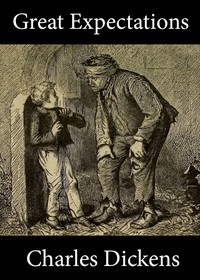
Philip Pirrip — Pip — is an orphan living with his sister and her husband Joe Gargery, a blacksmith, in the Kent marshes. As a boy, he encounters an escaped convict named Abel Magwitch and brings him food and a file to cut his leg-iron. He later meets Miss Havisham, the eccentric recluse, and her adopted daughter Estella — beautiful, cold, and trained to disdain exactly the kind of boy Pip is.
Then, through a London lawyer named Jaggers, Pip learns he has an anonymous benefactor and is to be raised as a gentleman. He goes to London, is ashamed of Joe, falls in love with Estella, and wastes his money living beyond his means.
The identity of the benefactor — and what it means when it is revealed — is the novel's great reversal. It forces Pip (and the reader) to reassess everything that has come before, and to understand that Pip has been wrong about what matters for most of the novel.
How Long Is Great Expectations?
| Reading speed | Time to finish |
|---|---|
| 200 WPM (slow) | ~15.4 hours |
| 250 WPM (average) | ~12.3 hours |
| 350 WPM (practised) | ~8.8 hours |
| 500 WPM (RSVP) | ~6.2 hours |
One hour per day at 350 WPM: nine days. It reads faster than the length suggests — the serial structure means momentum is built in.
Reading Strategy
The serial rhythm works in your favour — Dickens wrote Great Expectations chapter by chapter under deadline, and each chapter is designed to create forward pull. Read in chapter-sized chunks and let the cliffhangers do their work.
Three stages of Pip's expectations:
- Chapters 1–19: Childhood and the gift of expectations. Read quickly — the marsh atmosphere is vivid and the mystery establishes itself fast.
- Chapters 20–39: London. Pip's self-deception and class anxiety. This is where readers sometimes slow — push through; the payoff is in Part Three.
- Chapters 40–59: The return of Magwitch and the collapse of Pip's illusions. Read at full attention. These chapters contain some of the finest scenes Dickens ever wrote.
Miss Havisham and Estella — notice how Estella is described in almost exactly the language used for prize objects in Miss Havisham's house. This is deliberate and central to the novel's meaning.
Use warpread's RSVP mode at 300–350 WPM — Dickens's prose is animated and rhythmically energetic, and RSVP reading captures the serial urgency he wrote with.
For the full speed reading technique, see how to read faster.
Where to Read Great Expectations Free
- warpread library — instant browser reading, RSVP mode, no account needed
- Project Gutenberg — complete text, EPUB and download
- Standard Ebooks — best-formatted free EPUB
More Dickens and Victorian Fiction
Great Expectations sits at the peak of the Victorian novel. For more:
- A Tale of Two Cities — Dickens's historical novel; the one with the famous opening
- Middlemarch by George Eliot — longer and more ambitious; arguably the greatest Victorian novel
For the full list of free classics, see the 50 best free classic novels to read online.
Continue Reading
If you enjoyed this guide, here are the best next steps:
Read Great Expectations free in warpread.app →
For tips on building reading speed with books like this, see How to Speed Read: 7 Proven Techniques — covering RSVP practice, subvocalisation reduction, and how to track your progress.
If you're looking for more books at a similar level, warpread's free library has 70+ public domain classics ready to read in your browser, organised by author, genre, and difficulty.
Topics
Frequently asked questions
Is Great Expectations free to read online?
Yes. Great Expectations was published in 1861 and is in the public domain. You can read it free at warpread.app's library, Project Gutenberg (ID 1400), and Standard Ebooks — no account, no download, no payment required.
How long does it take to read Great Expectations?
Great Expectations is approximately 185,000 words. At 250 WPM it takes about 12.3 hours. At 350 WPM around 8.8 hours. At 500 WPM with RSVP reading, about 6.2 hours. Reading one hour per day at 350 WPM, you finish in under nine days.
What is Great Expectations about?
Great Expectations follows Pip, an orphan boy in rural Kent, from childhood through young adulthood in Victorian London. An anonymous benefactor provides him with wealth and 'great expectations' of becoming a gentleman. The novel is about class, identity, shame, and what it means to be a good person — Pip spends much of the novel learning that social status is not the same as moral worth.
Who is Miss Havisham in Great Expectations?
Miss Havisham is one of the great eccentrics in English fiction — a wealthy recluse who was jilted on her wedding day decades before the novel begins and has stopped all the clocks, worn her wedding dress ever since, and kept the rotting wedding cake on the table. She adopts Estella and raises her to break men's hearts. She is partly the villain of the novel and partly its most pitiable figure.
Is Great Expectations hard to read?
Great Expectations is one of Dickens's most accessible novels — the plot is tightly constructed, the narrator (Pip as an adult looking back on his childhood) is consistently engaging, and the mystery of the benefactor's identity creates sustained narrative tension. It was originally published as a serial, so each chapter ends with a reason to continue.
What is the ending of Great Expectations?
Dickens wrote two endings. The original ending has Pip encounter Estella briefly in London — she has remarried after her first husband's death and is changed by suffering. The revised ending, the one in most editions, is ambiguous but traditionally read as suggesting Pip and Estella will finally be together. Most scholars prefer the original; most readers prefer the revised version.
Ready to apply these techniques?
Take the free reading speed test to benchmark your WPM and get personalised technique suggestions.